Buy lootbox.eu ?
We are moving the project
lootbox.eu .
Are you interested in purchasing the domain
lootbox.eu ?
domain@kv-gmbh.de · 0541-91531010
Buy lootbox.eu ?
Are there virtual machines in the data center?
Yes, there are virtual machines in the data center. Virtual machines are a key component of modern data center infrastructure, allowing for efficient use of physical server resources by running multiple virtualized operating systems on a single physical server. This helps to optimize resource utilization, reduce hardware costs, and simplify management and maintenance of the data center environment. Virtual machines also provide flexibility and scalability, allowing for easy deployment and migration of workloads as needed. **
Are virtual machines located in the data center?
Yes, virtual machines are typically located in data centers. Data centers are facilities that house servers, storage devices, networking equipment, and other IT infrastructure, including virtualization technology that enables the creation and management of virtual machines. By centralizing virtual machines in data centers, organizations can efficiently utilize resources, ensure high availability, and provide secure access to applications and data. **

Similar search terms for Microsoft-System-Center-Virtual
Top-Angebote
Products related to Microsoft-System-Center-Virtual:
-
Microsoft System Center Virtual Machine 2022 Service Manager Server GLOBALMicrosoft System Center Service Manager Server: IT service management (ITSM) tool for managing service requests, incidents, and problems within your IT infrastructure. Can be integrated with VMM to manage service requests related to virtual machines, like provisioning or troubleshooting. Provides features for tracking incidents, approvals, and workflows for IT service management. Together: VMM manages the technical aspects of virtual machines. Service Manager provides a framework for managing service requests and incidents related to those virtual machines. Here are some resources for further reading: System Center Virtual Machine Manager: https://learn.microsoft.com/en-us/system-center/vmm/whats-new-in-vmm?view=sc-vmm-2022 What's new in System Center Virtual Machine Manager: https://learn.microsoft.com/en-us/system-center/vmm/whats-new-in-vmm?view=sc-vmm-2022 Install Service Manager on virtual machines: https://learn.microsoft.com/en-us/system-center/scsm/install-sm-vms?view=sc-sm-2022169,15 £*Shipping: 0,00 £Secure redirect to the provider
-
Microsoft System Center Virtual Machine 2022 Operations Manager Server GLOBALMicrosoft System Center Virtual Machine Manager (VMM) 2022 and Operations Manager (SCOM) 2022 are actually two separate products within the Microsoft System Center suite, but they can be integrated to work together. Here's a breakdown of each: Microsoft System Center Virtual Machine Manager (VMM) 2022: Manages Hyper-V virtualization environments, allowing you to provision, deploy, and manage virtual machines (VMs) at scale. Supports creating and managing virtual networks, storage, and security for your VMs. Integrates with Azure Stack HCI for managing hyper-converged infrastructure deployments. Microsoft System Center Operations Manager (SCOM) 2022: Focuses on monitoring the health and performance of your IT infrastructure, including physical and virtual servers, applications, and network devices. Provides real-time monitoring and alerts you to potential issues. Offers tools for troubleshooting and analyzing performance data. Integration between VMM and SCOM: You can integrate VMM with SCOM to monitor the health and performance of your VMs managed by VMM. This allows you to get a unified view of your entire IT infrastructure, including both physical and virtual resources. Requires SCOM to be running on a supported version, typically System Center 2022. In summary: Microsoft System Center Virtual Machine Manager 2022 Operations Manager Server doesn't refer to a single product, but rather two separate tools within System Center that can be used together. VMM manages your virtual machines, while SCOM monitors the health of your entire IT infrastructure, including VMs managed by VMM.84,58 £*Shipping: 0,00 £Secure redirect to the provider
-
Microsoft System Center Virtual Machine 2022 Data Protection Manager Server GLOBALMicrosoft System Center Virtual Machine Manager (SCVMM) 2022 Data Protection Manager (DPM) Server is a data backup and disaster recovery solution designed for virtual environments. It's part of the System Center suite, a collection of tools for managing on-premises datacenters. Here's a breakdown of what it offers: Backup and Recovery for VMs: DPM allows you to back up virtual machines (VMs) running on Hyper-V or VMware vSphere. This ensures you have copies of your VMs in case of hardware failure, software corruption, or accidental deletion. Support for Latest Technologies: DPM 2022 specifically includes support for Windows Server 2022, VMware vSphere 7.0, and SQL Server 2022. Improved Recovery Options: Features like parallel restore for VMs and SQL Self Service Recovery Tool in DPM 2022 can help streamline the recovery process after an outage. Simplified Management: DPM integrates with SCVMM, allowing you to manage backups and virtual machines from a central console. Here are some things to keep in mind: Focus on Virtual Environments: DPM is primarily focused on protecting virtual machines, not physical servers or workstations. On-Premises Solution: DPM is designed for on-premises deployments, not cloud-based environments like Azure. Evaluation Version Available: Microsoft offers an evaluation version of DPM 2022 for testing purposes before committing to a full license. This clarifies what Microsoft System Center Virtual Machine Manager 2022 Data Protection Manager Server is and its role in data protection.84,58 £*Shipping: 0,00 £Secure redirect to the provider
-
Microsoft System Center Virtual Machine 2025 Operations Manager Server License Key GLOBALMicrosoft System Center Virtual Machine 2025 Operations Manager Microsoft System Center Operations Manager (SCOM) 2025 is a comprehensive monitoring and management solution designed to ensure the health, performance, and availability of applications and infrastructure across hybrid environments. As part of the System Center suite, Operations Manager provides deep visibility into physical, virtual, and cloud-based systems, helping IT teams proactively identify and resolve issues before they impact users. Key Features of Operations Manager 2025 Comprehensive Infrastructure Monitoring Operations Manager 2025 supports monitoring across Windows, Linux, and UNIX systems, offering detailed insights into servers, applications, and services. It includes built-in management packs for common workloads and allows custom packs for specialized environments. Scalable Architecture Designed for enterprise-scale deployments, SCOM 2025 supports: Up to 3,000 agent-monitored computers per management server Up to 25,000 Agentless Exception Monitoring (AEM) computers per dedicated server Up to 15,000 agent-managed and UNIX/Linux computers per management group Application Performance Monitoring (APM) Provides real-time visibility into application responsiveness and availability. Supports: Up to 700 APM agents Up to 400 monitored applications Up to 12,000 URLs per management group Custom Management Packs Users can create tailored monitoring solutions using the Management Pack Authoring Tool. This allows for custom rules, alerts, dashboards, and workflows to suit specific business needs. Integration with Windows Server 2025 Operations Manager 2025 is optimized for Windows Server 2025 and can be evaluated using a pre-configured virtual hard disk (VHD) that includes both platforms. This enables testing in a virtualized environment without requiring full installation. Deployment and Management Capabilities Flexible Deployment Options Supports on-premises, cloud, and hybrid environments. Gateway servers enable monitoring of remote networks, and agents can be multihomed to report to multiple management groups. Operations Guide and Documentation Microsoft provides extensive documentation, including setup guides, monitoring procedures, and troubleshooting resources to ensure smooth deployment and operation. Upgrade Path System Center 2025 supports upgrades from System Center 2022. Microsoft outlines a clear upgrade sequence for each component to ensure compatibility and minimize downtime. System Requirements and Compatibility Hardware Requirements Recommendations vary based on deployment size and workload. Microsoft provides detailed sizing guidance to ensure optimal performance. Software Compatibility Note that Service Provider Foundation (SPF) is no longer included in System Center 2025. However, SPF 2022 remains compatible for legacy scenarios.606,27 £*Shipping: 0,00 £Secure redirect to the provider


-
Can a virtual disk image (VDI) be opened without creating a virtual operating system?
Yes, a virtual disk image (VDI) can be opened without creating a virtual operating system. There are tools available that allow users to mount VDI files as a virtual disk drive on their host operating system, enabling them to access and extract files stored within the VDI without actually booting up a virtual machine. This can be useful for retrieving specific files or data from a VDI without the need to run a full virtual operating system. **
-
Can one open a virtual disk image (VDI) without creating a virtual operating system?
Yes, it is possible to open a virtual disk image (VDI) without creating a virtual operating system. There are software tools available that allow users to mount and explore the contents of a VDI file directly on their host operating system without the need to create a virtual machine. By mounting the VDI file, users can access and extract files and data stored within the disk image without having to boot up a virtual operating system. **
-
Can you open a virtual disk image (VDI) without creating a virtual operating system?
No, a virtual disk image (VDI) is typically associated with a virtual machine, which requires a virtual operating system to run. The VDI file contains the virtual hard drive of the virtual machine, and without the virtual operating system, there would be no way to access or interact with the contents of the VDI file. In order to open and use a VDI file, it needs to be attached to a virtual machine running a virtual operating system. **
-
Where can one sell virtual items?
Virtual items can be sold on various online platforms such as gaming marketplaces, virtual goods trading websites, and online forums dedicated to buying and selling virtual items. Some popular platforms for selling virtual items include Steam Community Market, eBay, PlayerAuctions, and G2G. It is important to research and choose a reputable platform with a good track record of facilitating safe and secure transactions. **
How does the time system work in Pokémon Crystal Virtual Console?
In Pokémon Crystal Virtual Console, the time system works similarly to the original game. The in-game clock is based on the real-time clock of the Nintendo 3DS system. This means that the time in the game will match the time set on the console. Certain in-game events, such as the day and night cycle, Pokémon availability, and time-based events like the Bug-Catching Contest, will change based on the time of day. Players can also manipulate the time in the game by adjusting the clock on their Nintendo 3DS system. **
Can a virtual machine be used as an operating system?
No, a virtual machine is not an operating system itself, but rather a software program that emulates a physical computer. It allows users to run multiple operating systems on a single physical machine. The virtual machine runs on top of a host operating system and provides a platform for other operating systems to run within it. Therefore, while a virtual machine can host and run an operating system, it is not an operating system itself. **
Top-Angebote
Products related to Microsoft-System-Center-Virtual:
-
Microsoft System Center Virtual Machine 2022 Manager Server GLOBALMicrosoft System Center Virtual Machine Manager (SCVMM) 2022 Manager Server is a tool designed for managing and deploying virtualized data centers. It's part of the wider System Center suite which offers a range of applications for private and hybrid cloud infrastructure management. Here's a breakdown of what SCVMM 2022 Manager Server does: Manages Virtual Environments: SCVMM excels at managing virtual environments built on Microsoft Hyper-V and even VMware vSphere hypervisors. This allows you to control virtual machines (VMs) across different platforms from a single interface. Provisioning and Deployment: SCVMM simplifies VM provisioning and deployment. You can create VMs, configure settings, and deploy them to hosts efficiently. Monitoring and Automation: The server offers performance monitoring for VMs and the virtual infrastructure. You can also automate tasks like VM provisioning, migration, and disaster recovery. Scalability and Security: SCVMM is designed to handle large-scale virtual environments with features for capacity planning and resource optimization. Security is also a focus, with role-based access control to manage user permissions. Some key features of SCVMM 2022 Manager Server include: Support for Latest Technologies: Manages Azure Stack HCI clusters and integrates with Azure cloud services. Improved Scalability: Supports up to 64 virtual networks for Windows Server 2019 and later. Enhanced Security: Offers more secure options like Smart Card login and improved integration with System Center Operations Manager (SCOM). VMware Support: Manages VMs running on VMware vSphere 7.0 and ESXi 7.0. Here are some additional points to consider: SCVMM 2022 Manager Server requires a separate SQL Server database for storing configuration information. There are system requirements for hardware, software, and supported server versions to run SCVMM effectively. Microsoft provides resources and documentation for installation, configuration, and management of SCVMM 2022 https://learn.microsoft.com/en-us/system-center/vmm/whats-new-in-vmm?view=sc-vmm-2022 . Overall, Microsoft System Center Virtual Machine Manager 2022 Manager Server is a powerful tool for managing and automating virtualized data centers built on Hyper-V and VMware vSphere. It offers features for provisioning, deployment, monitoring, security, and scalability, making it a valuable asset for organizations with complex virtual environments.206,37 £*Shipping: 0,00 £Secure redirect to the provider
-
Microsoft System Center Virtual Machine Endpoint Configuration Manager GLOBALSystem Center Virtual Machine Endpoint Configuration Manager (SCVMM and SCCM for short) is actually a combination of two separate tools from Microsoft's System Center suite, used for managing virtualized environments and deploying/managing devices. Here's a breakdown: System Center Virtual Machine Manager (SCVMM): This tool focuses on managing virtual machines (VMs) within your datacenter. It allows you to: Provision and deploy VMs: Create new VMs, configure them, and deploy them to your chosen hypervisor (like Hyper-V or VMware). Manage VM lifecycle: Perform operations like starting, stopping, migrating, and cloning VMs. Automate VM tasks: Set up automated workflows for VM provisioning, deployment, and management. Monitor VM health: Keep track of VM performance and resource usage. Microsoft Endpoint Configuration Manager (SCCM): This tool, now part of the Endpoint Manager suite, focuses on managing devices (desktops, laptops, servers) on your network. It allows you to: Deploy operating systems and applications: Remotely install Windows or other OSes and applications on your devices. Patch management: Automatically deploy security patches and updates to keep your devices secure. Inventory and asset management: Track hardware and software inventory across your devices. Remote control: Access and control devices remotely for troubleshooting purposes. While they are separate tools, they can be used together for a more comprehensive management solution. For instance, you can use SCVMM to provision and deploy VMs with SCCM pre-installed for easier device management. Here are some additional points to consider: Combined Name: Since SCCM is now part of Endpoint Manager, the full name might not be commonly used anymore. You might just hear them referred to individually or as "System Center suite". Licensing: Both SCVMM and SCCM require separate licensing for managing servers and devices. If you're looking to manage virtual environments and deploy/manage devices within your organization, then understanding the capabilities of SCVMM and SCCM can be helpful.84,58 £*Shipping: 0,00 £Secure redirect to the provider
-
Microsoft System Center Virtual Machine 2022 Service Manager Server GLOBALMicrosoft System Center Service Manager Server: IT service management (ITSM) tool for managing service requests, incidents, and problems within your IT infrastructure. Can be integrated with VMM to manage service requests related to virtual machines, like provisioning or troubleshooting. Provides features for tracking incidents, approvals, and workflows for IT service management. Together: VMM manages the technical aspects of virtual machines. Service Manager provides a framework for managing service requests and incidents related to those virtual machines. Here are some resources for further reading: System Center Virtual Machine Manager: https://learn.microsoft.com/en-us/system-center/vmm/whats-new-in-vmm?view=sc-vmm-2022 What's new in System Center Virtual Machine Manager: https://learn.microsoft.com/en-us/system-center/vmm/whats-new-in-vmm?view=sc-vmm-2022 Install Service Manager on virtual machines: https://learn.microsoft.com/en-us/system-center/scsm/install-sm-vms?view=sc-sm-2022169,15 £*Shipping: 0,00 £Secure redirect to the provider
-
Microsoft System Center Virtual Machine 2022 Operations Manager Server GLOBALMicrosoft System Center Virtual Machine Manager (VMM) 2022 and Operations Manager (SCOM) 2022 are actually two separate products within the Microsoft System Center suite, but they can be integrated to work together. Here's a breakdown of each: Microsoft System Center Virtual Machine Manager (VMM) 2022: Manages Hyper-V virtualization environments, allowing you to provision, deploy, and manage virtual machines (VMs) at scale. Supports creating and managing virtual networks, storage, and security for your VMs. Integrates with Azure Stack HCI for managing hyper-converged infrastructure deployments. Microsoft System Center Operations Manager (SCOM) 2022: Focuses on monitoring the health and performance of your IT infrastructure, including physical and virtual servers, applications, and network devices. Provides real-time monitoring and alerts you to potential issues. Offers tools for troubleshooting and analyzing performance data. Integration between VMM and SCOM: You can integrate VMM with SCOM to monitor the health and performance of your VMs managed by VMM. This allows you to get a unified view of your entire IT infrastructure, including both physical and virtual resources. Requires SCOM to be running on a supported version, typically System Center 2022. In summary: Microsoft System Center Virtual Machine Manager 2022 Operations Manager Server doesn't refer to a single product, but rather two separate tools within System Center that can be used together. VMM manages your virtual machines, while SCOM monitors the health of your entire IT infrastructure, including VMs managed by VMM.84,58 £*Shipping: 0,00 £Secure redirect to the provider
-
Are there virtual machines in the data center?
Yes, there are virtual machines in the data center. Virtual machines are a key component of modern data center infrastructure, allowing for efficient use of physical server resources by running multiple virtualized operating systems on a single physical server. This helps to optimize resource utilization, reduce hardware costs, and simplify management and maintenance of the data center environment. Virtual machines also provide flexibility and scalability, allowing for easy deployment and migration of workloads as needed. **
-
Are virtual machines located in the data center?
Yes, virtual machines are typically located in data centers. Data centers are facilities that house servers, storage devices, networking equipment, and other IT infrastructure, including virtualization technology that enables the creation and management of virtual machines. By centralizing virtual machines in data centers, organizations can efficiently utilize resources, ensure high availability, and provide secure access to applications and data. **
-
Can a virtual disk image (VDI) be opened without creating a virtual operating system?
Yes, a virtual disk image (VDI) can be opened without creating a virtual operating system. There are tools available that allow users to mount VDI files as a virtual disk drive on their host operating system, enabling them to access and extract files stored within the VDI without actually booting up a virtual machine. This can be useful for retrieving specific files or data from a VDI without the need to run a full virtual operating system. **
-
Can one open a virtual disk image (VDI) without creating a virtual operating system?
Yes, it is possible to open a virtual disk image (VDI) without creating a virtual operating system. There are software tools available that allow users to mount and explore the contents of a VDI file directly on their host operating system without the need to create a virtual machine. By mounting the VDI file, users can access and extract files and data stored within the disk image without having to boot up a virtual operating system. **
Similar search terms for Microsoft-System-Center-Virtual
-
Microsoft System Center Virtual Machine 2022 Data Protection Manager Server GLOBALMicrosoft System Center Virtual Machine Manager (SCVMM) 2022 Data Protection Manager (DPM) Server is a data backup and disaster recovery solution designed for virtual environments. It's part of the System Center suite, a collection of tools for managing on-premises datacenters. Here's a breakdown of what it offers: Backup and Recovery for VMs: DPM allows you to back up virtual machines (VMs) running on Hyper-V or VMware vSphere. This ensures you have copies of your VMs in case of hardware failure, software corruption, or accidental deletion. Support for Latest Technologies: DPM 2022 specifically includes support for Windows Server 2022, VMware vSphere 7.0, and SQL Server 2022. Improved Recovery Options: Features like parallel restore for VMs and SQL Self Service Recovery Tool in DPM 2022 can help streamline the recovery process after an outage. Simplified Management: DPM integrates with SCVMM, allowing you to manage backups and virtual machines from a central console. Here are some things to keep in mind: Focus on Virtual Environments: DPM is primarily focused on protecting virtual machines, not physical servers or workstations. On-Premises Solution: DPM is designed for on-premises deployments, not cloud-based environments like Azure. Evaluation Version Available: Microsoft offers an evaluation version of DPM 2022 for testing purposes before committing to a full license. This clarifies what Microsoft System Center Virtual Machine Manager 2022 Data Protection Manager Server is and its role in data protection.84,58 £*Shipping: 0,00 £Secure redirect to the provider
-
Microsoft System Center Virtual Machine 2025 Operations Manager Server License Key GLOBALMicrosoft System Center Virtual Machine 2025 Operations Manager Microsoft System Center Operations Manager (SCOM) 2025 is a comprehensive monitoring and management solution designed to ensure the health, performance, and availability of applications and infrastructure across hybrid environments. As part of the System Center suite, Operations Manager provides deep visibility into physical, virtual, and cloud-based systems, helping IT teams proactively identify and resolve issues before they impact users. Key Features of Operations Manager 2025 Comprehensive Infrastructure Monitoring Operations Manager 2025 supports monitoring across Windows, Linux, and UNIX systems, offering detailed insights into servers, applications, and services. It includes built-in management packs for common workloads and allows custom packs for specialized environments. Scalable Architecture Designed for enterprise-scale deployments, SCOM 2025 supports: Up to 3,000 agent-monitored computers per management server Up to 25,000 Agentless Exception Monitoring (AEM) computers per dedicated server Up to 15,000 agent-managed and UNIX/Linux computers per management group Application Performance Monitoring (APM) Provides real-time visibility into application responsiveness and availability. Supports: Up to 700 APM agents Up to 400 monitored applications Up to 12,000 URLs per management group Custom Management Packs Users can create tailored monitoring solutions using the Management Pack Authoring Tool. This allows for custom rules, alerts, dashboards, and workflows to suit specific business needs. Integration with Windows Server 2025 Operations Manager 2025 is optimized for Windows Server 2025 and can be evaluated using a pre-configured virtual hard disk (VHD) that includes both platforms. This enables testing in a virtualized environment without requiring full installation. Deployment and Management Capabilities Flexible Deployment Options Supports on-premises, cloud, and hybrid environments. Gateway servers enable monitoring of remote networks, and agents can be multihomed to report to multiple management groups. Operations Guide and Documentation Microsoft provides extensive documentation, including setup guides, monitoring procedures, and troubleshooting resources to ensure smooth deployment and operation. Upgrade Path System Center 2025 supports upgrades from System Center 2022. Microsoft outlines a clear upgrade sequence for each component to ensure compatibility and minimize downtime. System Requirements and Compatibility Hardware Requirements Recommendations vary based on deployment size and workload. Microsoft provides detailed sizing guidance to ensure optimal performance. Software Compatibility Note that Service Provider Foundation (SPF) is no longer included in System Center 2025. However, SPF 2022 remains compatible for legacy scenarios.606,27 £*Shipping: 0,00 £Secure redirect to the provider
-
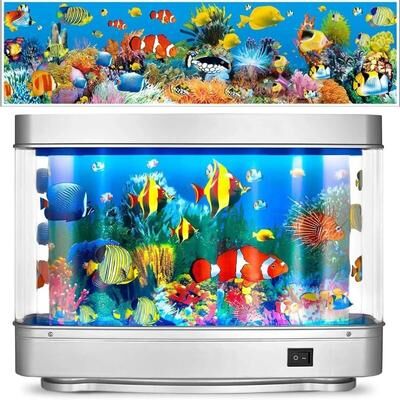
Uplift Essentials Virtual Motion Ocean Aquarium Lamp Virtual Motion Ocean Aquarium Lamp"Experience the tranquil beauty of the deep blue without the maintenance of a real tank with the Virtual Motion Ocean Aquarium Lamp. This creative decorative piece uses highdefinition ""moving picture"" technology to simulate a vibrant tropical reef,..."79,97 $*Shipping: 0,00 $Secure redirect to the provider
-
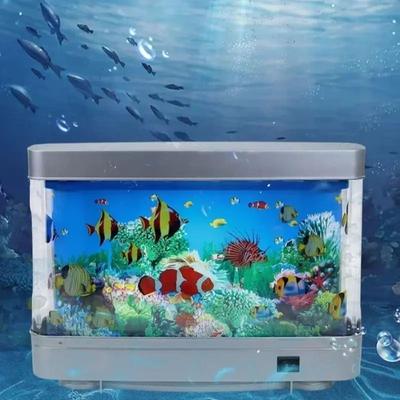
Uplift Essentials Serene Motion Virtual Aquarium Lamp Serene Motion Virtual Aquarium Lamp"Bring the soothing magic of the underwater world to your tabletop with the Serene Motion Virtual Aquarium Lamp. This highdefinition desktop aquarium decorative light uses advanced ""movingpicture"" technology to create a mesmerizing, continuous swim..."82,97 $*Shipping: 0,00 $Secure redirect to the provider
-
Can you open a virtual disk image (VDI) without creating a virtual operating system?
No, a virtual disk image (VDI) is typically associated with a virtual machine, which requires a virtual operating system to run. The VDI file contains the virtual hard drive of the virtual machine, and without the virtual operating system, there would be no way to access or interact with the contents of the VDI file. In order to open and use a VDI file, it needs to be attached to a virtual machine running a virtual operating system. **
-
Where can one sell virtual items?
Virtual items can be sold on various online platforms such as gaming marketplaces, virtual goods trading websites, and online forums dedicated to buying and selling virtual items. Some popular platforms for selling virtual items include Steam Community Market, eBay, PlayerAuctions, and G2G. It is important to research and choose a reputable platform with a good track record of facilitating safe and secure transactions. **
-
How does the time system work in Pokémon Crystal Virtual Console?
In Pokémon Crystal Virtual Console, the time system works similarly to the original game. The in-game clock is based on the real-time clock of the Nintendo 3DS system. This means that the time in the game will match the time set on the console. Certain in-game events, such as the day and night cycle, Pokémon availability, and time-based events like the Bug-Catching Contest, will change based on the time of day. Players can also manipulate the time in the game by adjusting the clock on their Nintendo 3DS system. **
-
Can a virtual machine be used as an operating system?
No, a virtual machine is not an operating system itself, but rather a software program that emulates a physical computer. It allows users to run multiple operating systems on a single physical machine. The virtual machine runs on top of a host operating system and provides a platform for other operating systems to run within it. Therefore, while a virtual machine can host and run an operating system, it is not an operating system itself. **
* All prices are inclusive of VAT and, if applicable, plus shipping costs. The offer information is based on the details provided by the respective shop and is updated through automated processes. Real-time updates do not occur, so deviations can occur in individual cases. ** Note: Parts of this content were created by AI.